AGH University of Kraków
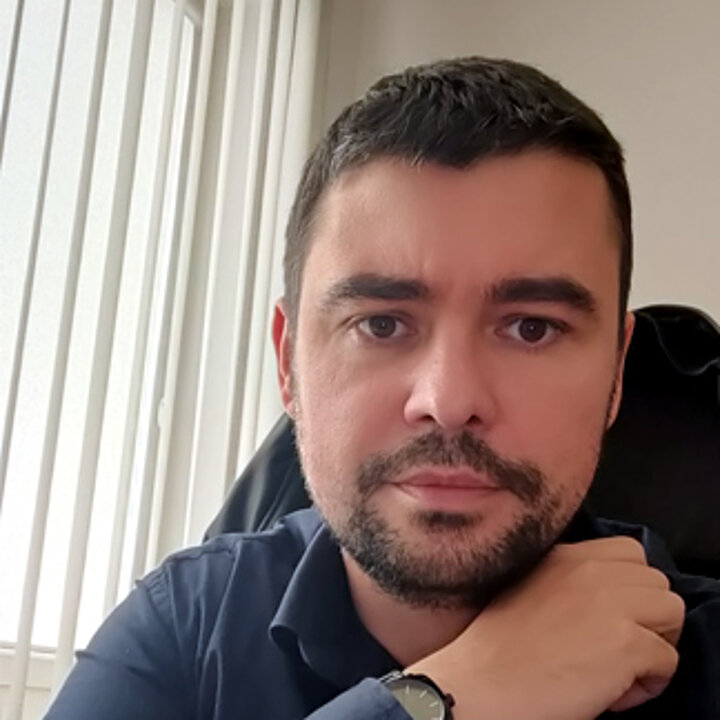
Jarosław Andrzej Wąs is a professor of computer science at AGH University of Kraków, Poland. He is responsible for preparing the AGH Deep Learning Summer School 2025 program.
He is currently Head of the Department of Applied Computer Science at the Faculty of Electrical Engineering, Automatics, Informatics and Biomedical Engineering, AGH. His main research interests include artificial intelligence, computational intelligence, modeling and simulation of complex systems, agentic AI and agent-based modeling. He has authored over 150 scientific publications in international journals and conferences.
Prof. Wąs has supervised six completed doctoral theses and several ongoing ones. He has been actively involved in numerous national and international research projects. He chaired program committees of major conferences, including ACRI (2014, 2016), IJCRS 2023, and FedCSIS 2025.
Within the academic community, he serves as Deputy Chair of the Discipline Council for Computer Science and Telecommunications at AGH and is a member of the Senate. He is also a member of the Committee on Computer Science of the Polish Academy of Sciences (PAN) and of the Geoinformatics Commission of the Polish Academy of Learning (PAU).
He is involved in mentoring students and overseeing student scientific circle Glider which have won many awards in conferences and competitions.
AGH University of Krakow
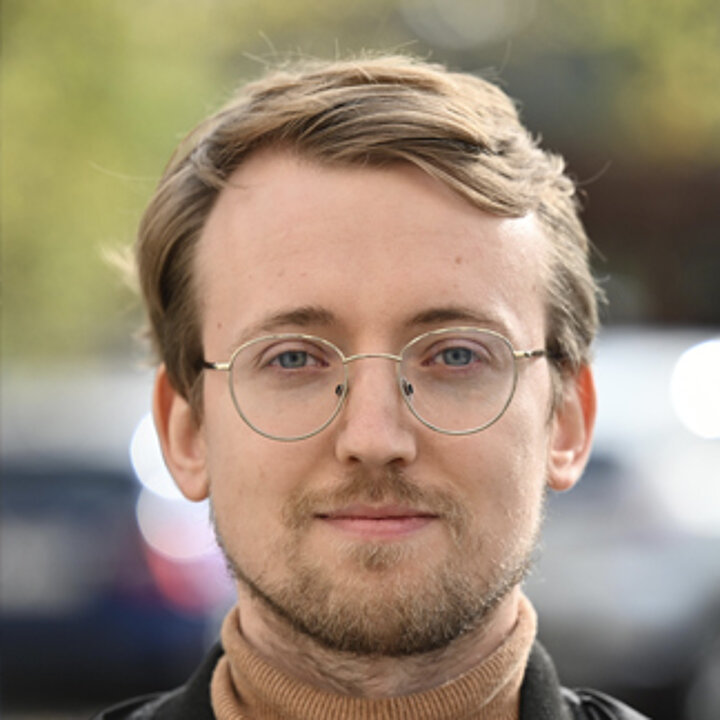
Tomasz Hachaj received M.S. in computer science from Krakow University of Technology, Poland, in 2006, a Ph.D degree in Computer Science from AGH University of Science and Technology, Krakow, Poland, in 2010, and a D.S. (habilitation) in computer science from Wrocław University of Science and Technology, Poland in 2017.
He works in the Department of Applied Computer Science in AGH University of Science and Technology, Krakow, Poland. He has participated in various Polish national projects, being involved at both the technical/research and administrative levels. Tomasz Hachaj is a Principal Investigator in the Machine Learning group in The Cosmic Ray Extremely Distributed Observatory (CREDO). He also takes part in many commercial projects working with big data.
He has authored and co-authored over 90 publications. His research interest is oriented to the development and application of deep learning, signal processing, and pattern recognition methods in various fields.
Jagiellonian University in Kraków
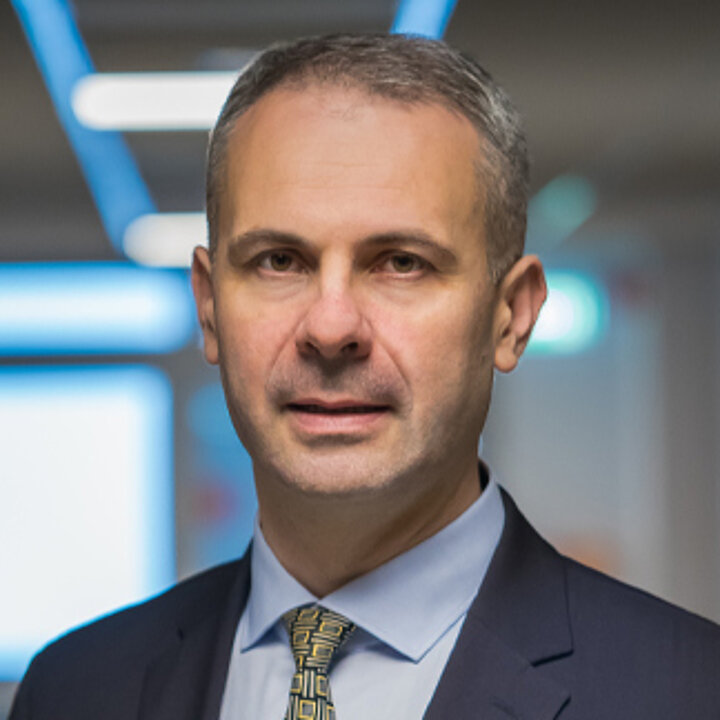
Przemysław Spurek is a researcher in the GMUM group operating at the Jagiellonian University in Krakow and the leader of the Neural Rendering research team at IDEAS INSTYTUT. In 2014, he defended his PhD in machine learning and information theory. In 2023, he obtained his habilitation degree and became a university professor. He has published articles at prestigious international conferences such as NeurIPS, ICML, IROS, AISTATS, ECML. He co-authored the book Głębokie uczenie. Wprowadzenie [Deep Learning. Introduction] – a compendium of knowledge about the basics of AI. He was the director of PRELUDIUM, SONATA, OPUS and SONATA BIS NCN grants. Currently, his research focuses mainly on neural rendering, in particular NeRF and Gaussian Splatting models.
Poznan University of Technology and SIGML
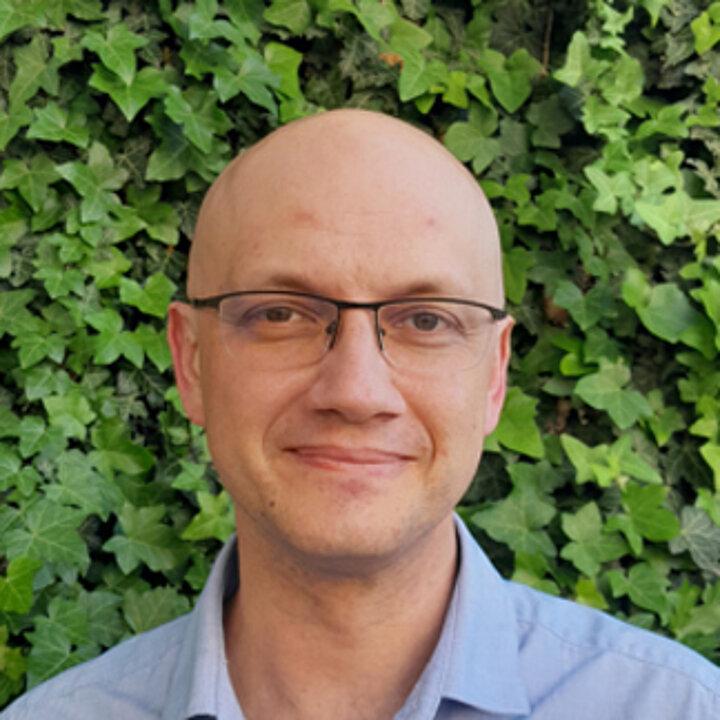
Jerzy Stefanowski works as a full professor at Poznan University of Technology, Institute of Computing Science. He received his Ph.D and Habilitation degrees from the same University. In 2021 he was elected as a corresponding member of Polish Academy of Sciences, where he also plays a role of a Chair of Scientific Council of Institute of Computer Science (IPI PAN) in Warsaw. His research interests include data mining, machine learning and XAI. Major results are concerned with: ensemble classifiers, learning from class-imbalanced data, online learning from evolving data streams, explainable AI, induction of various types of rules, data preprocessing, generalizations of rough set theory, descriptive clustering of texts and medical applications of data mining. He is the author and co-author of over 170 research papers and 2 books, which are highly cited. Moreover, he was a visiting professor or researcher in several universities, mainly in France, Italy, Belgium, Spain and Germany.
In addition to his research activities, he served in a number of organizational capacities: including positions in bodies of Polish Academy of Sciences, current vice-president of Polish Artificial Intelligence Society (vice-president since 2014); co-founder and co-leader of Polish Special Interest Group on Machine Learning. Moreover, he is the Editor in Chief of Foundations of Computing and Decision Science journal since 2012 and Action Editor of other journals.
More information can be found at http://www.cs.put.poznan.pl/jstefanowski/.
AGH University of Krakow
Based in the Department of Applied Computer Science at AGH University of Science and Technology, Igor Wojnicki serves as a Professor specializing in Artificial Intelligence. He also holds the position of Vice Dean for Cooperation and Education at the Faculty of Electrical Engineering, Automatics, Computer Science and Biomedical Engineering at AGH. His core research focuses on rule-based systems, logic programming, and graph transformations, encompassing knowledge representation methods, knowledge base design, and inference control.
Furthermore, his research extends to computational methods applicable to smart cities, particularly in areas such as optimizing lighting design and control, and leveraging graph formalism and artificial intelligence. This work has led to practical applications, including the co-founding of GRADIS, an AGH spin-off company focused on smart lighting optimization, which emerged directly from his research. His research in this area has been tested not only in laboratory settings but also in city-scale deployments.
Professor Wojnicki has actively contributed to numerous research projects, addressing topics like knowledge base design, ontology-oriented data repositories, AI-based optimization, and machine learning.
He holds a habilitation in Computer Science (2018), centered on semantic expressiveness with graph transformations in software design and system control, a PhD in Computer Science (2004) that explored extending the data processing capabilities of relational databases with a rule-based approach, and an MSc (2000) in Automation and Robotics. Prior to his current roles, he also gained international academic experience, including visiting positions at universities in the United States.
He is a strong supporter of free software and holds membership in the Free Software Foundation.
Wrocław University of Science and Technology and SIGML
Michal Wozniak is currently a professor of computer science at the Department of Systems and Computer Networks, Wroclaw University of Science and Technology, Wroclaw, Poland. He has authored or co-authored more than 350 papers and three books. His research focuses on machine learning, particularly compound classification methods, classifier ensembles, continual machine learning, and imbalanced data processing. Prof. Wozniak has been involved in research projects related to machine learning and has been a consultant for several commercial projects for well-known Polish companies and public administration. He received numerous prestigious awards for his scientific achievements, such as the IBM Smarter Planet Faculty Innovation Award, the IEEE Outstanding Leadership Award, and several best paper awards at prestigious conferences.
ETH Zurich
Maciej Besta leads research on large language models and graph computations at the Scalable Parallel Computing Lab at ETH Zurich and at the ETH Future Computing Lab; he also works on other aspects of the high-performance computing landscape, including interconnects, general sparse computing, and others. Maciej published, as the main leading author, around 40 papers at top conferences and journals. He won, among others, the IEEE TCHPC Award for Excellence in High-Performance Computing Early Career (2024), the OlympusMons Award for contributions to scalable storage systems (2024), the IEEE TCSC Award for Excellence in Scalable Computing Early Career (2023), ACM Research Highlights (2018), the ACM/IEEE-CS High-Performance Computing Fellowship (2015), the first Google Fellowship in Parallel Computing (2013), and the competition for the Best Student of Poland (2012). His doctoral dissertation on irregular computations received the ETH Medal for an outstanding doctoral thesis (2021), Honorable Mention from SPEC as a distinguished dissertation in performance measurement and analysis (2022), and awards from IEEE (2021) and ACM (2022) for the best doctoral dissertation worldwide in - respectively - scalable computing and high-performance computing. Maciej also won Best Paper awards and nominations - most of which as the primary author - at ACM/IEEE Supercomputing 2013, 2014, 2019 (for 2 different papers), 2022, and 2023 (for 2 different papers); at ACM HPDC 2015 and 2016, and others. Finally, Maciej is supported by the Fellowship in The Explorers Club (2022). More detailed information on: https://people.inf.ethz.ch/bestam/ .
Dr. Arkadiusz Sitek is a medical physicist and data scientist dedicated to advancing healthcare through translational artificial intelligence and computational medicine. With over two decades of experience spanning academia and industry, he has led pioneering research in machine learning, medical imaging, and digital health innovation. His work integrates principles from physics, statistics, and artificial intelligence to enhance disease diagnosis, treatment, and care delivery, with applications across cardiology, oncology, and other clinical domains.
Dr. Sitek holds a faculty appointment at Harvard Medical School and serves as Director of AI and Machine Learning in Nuclear Medicine and Molecular Imaging at Massachusetts General Hospital. He has previously held research and leadership roles at renowned institutions including Brigham and Women's Hospital, Beth Israel Deaconess Medical Center, Lawrence Berkeley National Laboratory, Philips Research North America, and IBM Watson Health. His contributions have led to numerous peer-reviewed publications and patents, with technologies licensed by companies such as Siemens and INVIA.
An experienced educator and mentor, Dr. Sitek has supervised graduate students, postdoctoral fellows, and junior faculty, and remains deeply engaged in fostering interdisciplinary collaboration at the intersection of artificial intelligence, medicine, and technology.
AGH University of Krakow
Sebastian Ernst is an academic researcher and teacher in the disciplines of artificial intelligence and data science. He has authored and taught academic courses in the areas of machine learning, data engineering, and database technologies. Having obtained his PhD from the AGH University of Kraków in 2010, he has authored over 70 scientific publications in journals and conference proceedings. Additionally, he has delivered several keynote lectures at conferences and conducted training courses in the aforementioned fields.
Dr Ernst has served as the coordinator of two research projects focused on the application of artificial intelligence in smart cities. These projects resulted in the deployment of a smart lighting system spanning multiple districts of Kraków, Poland, and the development of graph-based methodology for integrating sensor and GIS data in order to train spatially-aware machine learning models capable of comprehending the context of detected events.
Furthermore, he was a co-founder of a university start-up company specialising in smart lighting solutions. In this capacity, he envisioned and oversaw the development of a specialised GIS application designed to facilitate the preparation of highly detailed datasets for street lighting design. Subsequently, he coordinated the development a graph-based system utilising machine learning models to estimate the energy requirements for street lighting based solely on general-purpose map data.
His other professional interests include web and mobile application development as well as IT security. His practical experience in these areas is incorporated into his courses tailored for computer science students at AGH.
Wrocław University of Science and Technology
Jakub Klikowski has been employed at the Department of Computer Systems and Networks at Wrocław University of Science and Technology since October 2018, currently as an assistant professor. He participated in research in the NCN grant “Imbalanced data stream classification algorithms” and the NCN grant “Integration of base classifiers in geometric space”. He went for a month-long research internship at the University of Technology Sydney in Australia, funded by the EU project “Renoir”. In 2022, he received a doctoral degree with honors in information and communication technology. Current research interests include natural language processing, large language models, and classification of difficult data. He is participating in implementing the project “System Wykrywania Dezinformacji Metodami Sztucznej Inteligencji (SWAROG)” funded by the National Center for Research and Development. This project uses machine learning methods and natural language processing techniques to detect disinformation.
AGH University of Krakow and Nvidia
Paweł Morkisz – mathematician, researcher, deep learning expert, and technology leader. He holds a PhD in mathematics from the AGH University of Science and Technology, where his research focused on optimal algorithms under uncertain information, including strong approximations of stochastic differential equations. Since 2018, he has been an assistant professor at the Faculty of Applied Mathematics at AGH, conducting research in computational mathematics, stochastic processes, and their intersection with artificial intelligence.
He combines academic excellence with industry leadership. He is currently Deep Learning Algorithms Director at NVIDIA, where he leads a team developing and optimizing state-of-the-art deep learning models both for training and for inference (NVIDIA Inference Microservices -- NIMs), including LLM, VLM, and diffusion models. His academic achievements include numerous international publications in numerical analysis, stochastic modeling, and deep learning, as well as prestigious awards from international mathematical olympiads.
He co-founded an AI-driven company, Reliability Solutions, where he was CTO, leading R&D teams applying advanced mathematics and AI to real-world problems such as predictive maintenance and demand forecasting. Paweł is also an ambassador for the NVIDIA Deep Learning Institute and an active speaker at international conferences, promoting the synergy between rigorous mathematical theory and cutting-edge machine learning applications.
AGH University of Krakow
Dr inż. Michał Pikus is an accomplished academic teacher, researcher, and data scientist passionate about fostering transdisciplinary approaches in science that integrate both educational and empirical dimensions. His expertise spans multiple domains, including informatics, artificial intelligence, and embedded systems.
Currently affiliated with AGH University of Krakow as a researcher and lecturer, Dr inż. Michał Pikus specializes in the integration of artificial intelligence with embedded systems. His research focuses on developing efficient, low-power AI solutions optimized for real-time data processing on resource constrained devices. He explores cutting edge hardware,software co-design methodologies and edge computing techniques to enhance algorithm performance in practical applications. Additionally, he leads advanced programming initiatives, mentoring students in Python, AI, intelligent systems, and data analysis, ensuring a strong connection between academic exploration and industry demands.
Beyond academia, Dr inż. Michał Pikus is an independent researcher deeply engaged in AI applications, renewable energy forecasting, and embedded systems integration. His professional experience includes working as a Senior Software Engineer at Mobica, where he applies AI, GenAI, and AI on Edge principles to embedded Linux development. Previously, he held key roles in autonomous systems, DSP development, and embedded software engineering at prominent organizations such as Aptiv, WB Electronics S.A., and Aigorithmics.
His technical expertise encompasses AI, machine learning, deep learning, embedded systems, real-time operating systems (RTOS), automotive software development, DSP processing, and large language model operations (LLMOps). His doctoral research at AGH University of Krakow focused on developing AI methodologies for forecasting energy production in photovoltaic and wind farms, demonstrating his commitment to leveraging AI for sustainable development.
With a career spanning industry and academia, Dr inż. Michał Pikus continues to shape the future of AI driven innovations by fostering interdisciplinary collaborations and driving forward the development of next-generation embedded AI solutions.
Wrocław University of Science and Technology
Paweł Zyblewski is an Assistant Professor at the Department of Systems and Computer Networks, Wroclaw University of Science and Technology, Poland. Research work related to his doctoral dissertation, entitled "Classifier selection for imbalanced data stream classification", in which he focused on the use of dynamic ensemble selection algorithms for the analysis of highly imbalanced data streams, resulted in him receiving a Scholarship from the Minister of Education and Science for outstanding young scientists and winning the Polish Artificial Intelligence Society (PSSI) Best Ph.D. Dissertation in Artificial Intelligence Contest in 2021.
In addition to fundamental research in machine learning, he is involved in numerous interdisciplinary projects and, as an associate supervisor, oversees doctoral students (including those participating in the industrial doctorate program) in disciplines such as Architecture and Urban Planning and Mechanical Engineering.
His research interests are currently related to imbalanced data classification, data stream analysis, multimodal data analysis, modality encoding, dynamic classifier selection, semi-supervised learning, and transfer learning.